What to do immediately when your commercial fridge breaks down: A 5-step emergency action plan
By Commercial Fridge Repair 11 min read
When Every Second Counts: Your Commercial Fridge Emergency Response Guide
A malfunctioning commercial fridge isn't merely an inconvenience – it's a critical business emergency that demands immediate attention. Within hours, thousands of pounds worth of stock can spoil, health and safety compliance can be compromised, and your reputation may suffer irreparable damage.
The food service and retail sectors across the UK lose significant revenue annually due to refrigeration failures. When your commercial refrigeration system fails during peak trading hours, every minute without proper cooling accelerates product deterioration and potential financial loss. Restaurant kitchens, supermarkets, and hospitality venues face particularly acute pressure, where a single breakdown can halt operations entirely.
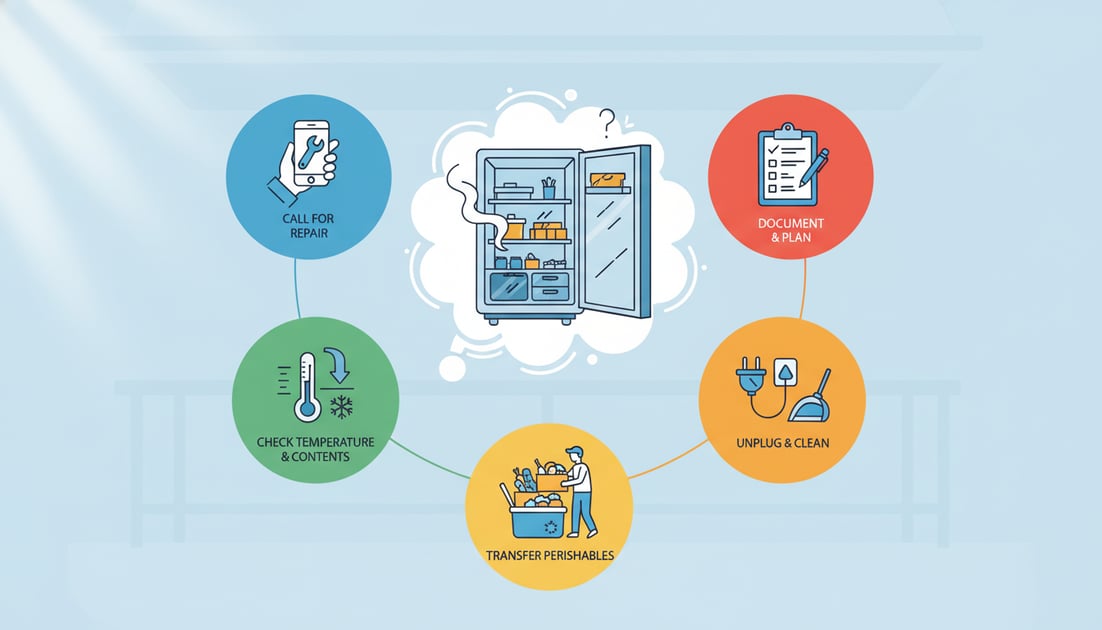
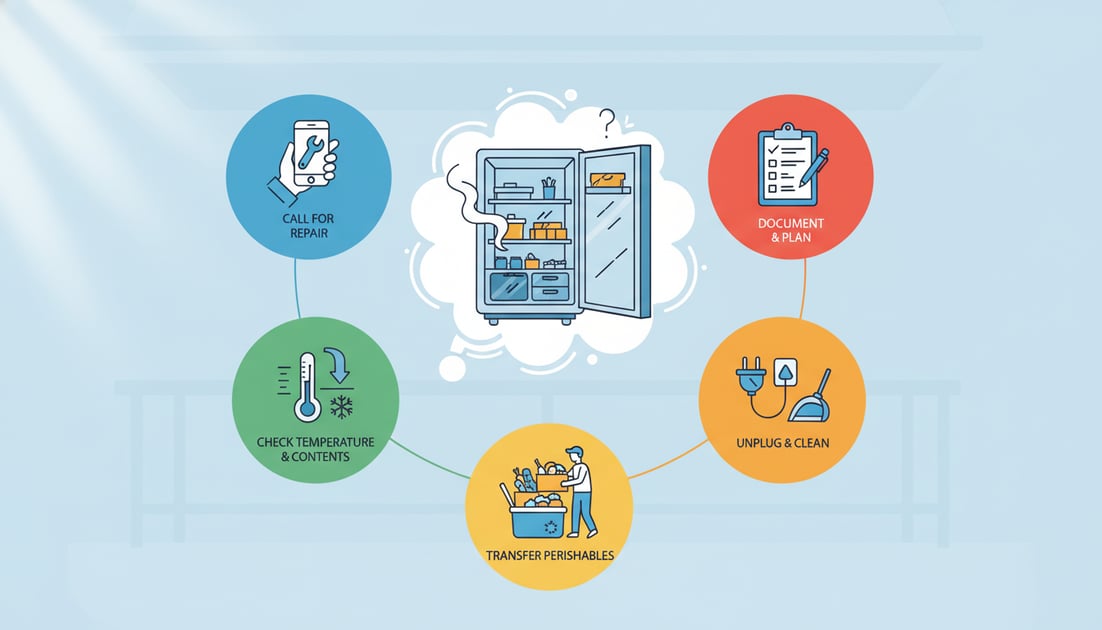
The difference between a minor disruption and a catastrophic loss often comes down to how quickly and effectively you respond. Having a structured emergency action plan ensures you protect your stock, maintain compliance, and minimise downtime. This guide outlines five essential steps to take immediately when your commercial fridge stops working properly – from initial assessment through to securing professional service. Whether you're managing a busy restaurant kitchen or overseeing multiple retail locations, this framework provides the expert guidance needed to navigate refrigeration emergencies with confidence and efficiency.
Is My Fridge Not Working an Emergency?
Whether your commercial refrigerator failure constitutes an emergency depends primarily on three factors: temperature deviation, stock value at risk, and regulatory compliance requirements.
Immediate emergency situations include:
- Internal temperatures exceeding 8°C, the legal threshold for high-risk foods under Food Standards Agency regulations
- Complete system failure during peak service hours with substantial perishable inventory
- Unusual noises, burning smells, or visible electrical issues indicating safety hazards
- Refrigerant leaks requiring immediate professional intervention
Non-emergency scenarios requiring prompt attention:
- Gradual temperature increases still within safe parameters
- Minor performance issues outside peak trading periods
- Frost accumulation affecting efficiency but not compromising food safety
- Door seal deterioration noticed during routine checks
The financial implications prove significant regardless. UK hospitality businesses can lose up to 10% of annual revenue through food wastage, with refrigeration failures representing a substantial contributor. A fully stocked commercial unit holding £2,000-£5,000 worth of inventory faces complete loss within 4-6 hours of temperature control failure.
Your response timeframe matters critically. If temperatures approach or exceed regulatory limits, treat the situation as urgent and implement your emergency action plan immediately. Contact a specialist like That Commercial Fridge Repair for rapid diagnostic assessment. For performance concerns within safe operating ranges, schedule professional inspection within 24-48 hours to prevent escalation. Understanding the refrigerant regassing process helps identify whether simple maintenance or comprehensive repair becomes necessary.
How Long Can You Go Without the Fridge Working?
Time constraints during refrigeration failure vary significantly based on food category and initial storage conditions.
High-risk perishables (raw meat, fish, dairy, prepared foods) remain safe for approximately two hours once temperatures exceed 8°C, the legal threshold under UK food safety regulations. Beyond four hours at unsafe temperatures, these items require disposal regardless of appearance or smell. Temperature abuse creates bacterial growth invisible to visual inspection alone.
Lower-risk items (hard cheeses, whole fruits, vegetables, condiments) tolerate slightly longer periods, typically 4-6 hours, though quality deterioration accelerates. Commercially sealed products generally withstand temperature fluctuations better than prepared or opened items.
Critical timeframe considerations:
- Door remains closed: Insulated units maintain safe temperatures 2-4 hours depending on ambient conditions
- Frequent door opening: Safe window reduces to 1-2 hours
- Stock density: Fully loaded units retain cooling longer than partially filled platforms
- External temperature: Summer conditions accelerate warming substantially
The financial calculation proves straightforward. A standard commercial unit holding £3,000 inventory faces complete loss within half a working day. This reality underscores why rapid professional response matters critically – waiting until tomorrow morning transforms a repairable challenge into catastrophic stock loss. Document temperatures hourly and maintain detailed records for insurance claims and compliance verification.
Step 1: Immediate Assessment and Damage Control
Your first five minutes determine whether you face manageable disruption or catastrophic loss. Begin with systematic assessment rather than reactive panic.
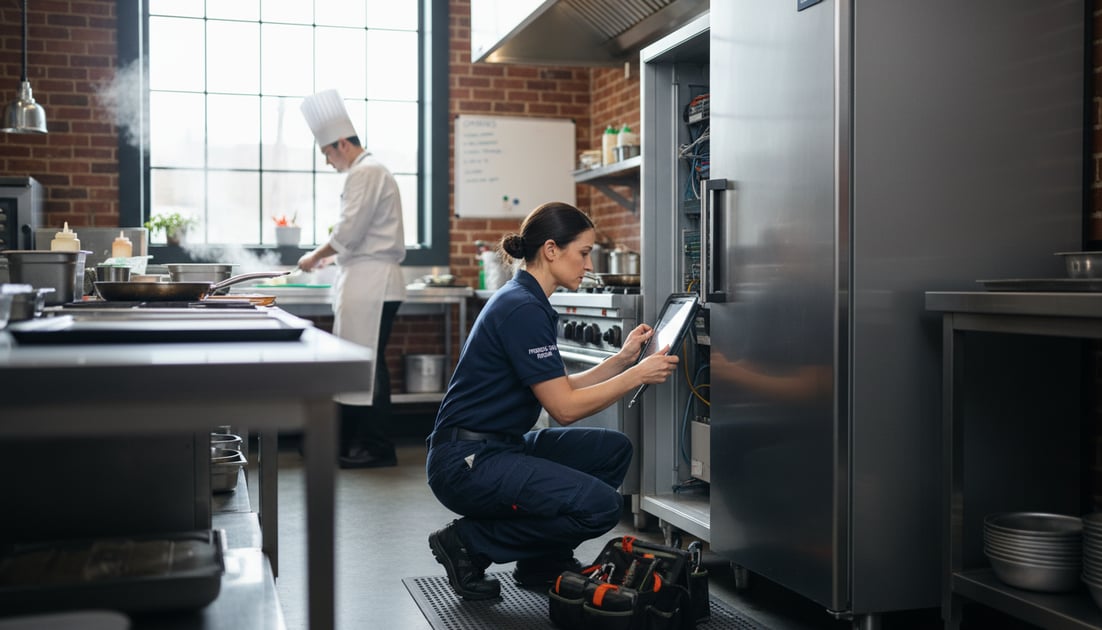
Power and electrical checks come first. Verify the unit remains plugged in and circuit breakers haven't tripped – surprisingly common culprits that require seconds to identify. Check whether lighting inside the cabinet functions and listen for compressor activity. Unusual silence, buzzing, or clicking sounds indicate electrical complications requiring immediate professional attention from our commercial fridge services.
Temperature documentation proves essential for insurance claims and compliance records. Note current internal readings using the built-in thermometer or an independent probe. Record exact time, temperature, and ambient conditions. This baseline establishes your response timeline and supports potential claims. UK insurers typically require detailed temperature logs demonstrating when safe thresholds were exceeded and what mitigation steps followed.
Stock protection begins immediately. Prioritise high-risk items – raw proteins, dairy products, prepared foods – which deteriorate fastest. Transfer temperature-sensitive inventory to functioning refrigeration if available. Where backup capacity doesn't exist, consolidate items in the coolest available space and avoid opening doors unnecessarily. Each access releases cold air, accelerating warming.
Pathogen considerations matter beyond visible spoilage. Research demonstrates certain bacteria, including Listeria monocytogenes, multiply at refrigeration temperatures, making precise temperature control critical for safety compliance. Document everything photographically – thermometer readings, stock placement, visible equipment damage. This evidence becomes invaluable for regulatory defence and financial recovery.
Step 2: What Action Should You Take If Your Fridge Shows a One-Off Temperature Fluctuation?
Brief temperature variations lasting under 20 minutes don't automatically signal catastrophic failure. Modern commercial refrigeration systems naturally cycle through temperature ranges as compressors activate and deactivate, maintaining optimal cooling without constant operation.
For fluctuations resolving within 20 minutes:
Monitor the situation rather than immediately calling emergency services. Commercial fridges typically operate between 0-5°C, with acceptable variations of 2-3°C during normal compressor cycling. Record the event – note exact temperature swing, duration, and whether the unit returned to proper operating range independently. If temperatures stabilised within safe parameters and the system resumes normal operation, schedule a routine maintenance inspection within the next week to identify potential underlying causes before they escalate.
Escalate to emergency service when:
- Temperature exceeds 8°C, breaching Food Standards Agency compliance thresholds
- Fluctuations repeat within 24 hours, indicating compressor cycling issues
- Unusual sounds accompany temperature changes, suggesting mechanical deterioration
- Recovery takes progressively longer with each occurrence
Single events often result from external factors – door left ajar momentarily, heavy stock loading, ambient temperature spikes during summer. However, recurring patterns suggest condenser coil contamination, refrigerant levels declining, or compressor wear requiring professional diagnostic assessment.
Keep detailed logs even for minor incidents. Patterns emerge through data rather than isolated observations. Three fluctuations weekly, though individually brief, indicate progressive system degradation demanding qualified technician evaluation before complete failure occurs during peak trading periods.
Step 3: Contact Your Emergency Repair Service
Once you've assessed the severity and protected vulnerable stock, securing qualified professional support becomes paramount. Calling your emergency repair service promptly prevents minor malfunctions from escalating into complete system failure.
Essential information to prepare before calling:
- Equipment make, model, and serial number (typically found on interior labels)
- Specific fault symptoms – unusual sounds, error codes, temperature readings
- Current internal temperature and how long it's been outside safe parameters
- Your business location and access requirements for after-hours attendance
- Whether refrigerant leaks are visible or suspected, requiring F-Gas certified response
Having these details ready enables technicians to arrive with appropriate parts and equipment, reducing diagnostic time significantly. Vague descriptions like "it's not cold enough" delay effective intervention compared to precise data: "temperature risen from 3°C to 9°C over two hours, compressor cycling every 90 seconds."
Understanding response timeframes manages expectations realistically. Reputable specialists offering 24/7 emergency coverage typically arrive within 2-4 hours for genuine emergencies, though overnight callouts may extend slightly. Geographic location affects timing – urban centres receive faster response than remote areas. Services like That Commercial Fridge Repair provide nationwide coverage with rapid deployment capabilities.
Warranty considerations influence cost implications. Check whether your equipment remains under manufacturer warranty or service contract before authorising chargeable work. Emergency callouts outside standard agreements typically incur premium rates, though preventing £3,000+ stock loss justifies the investment. Request transparent pricing confirmation before technicians commence repairs, ensuring no unexpected charges appear later.
Step 4: Protect Your Stock and Business Operations
Salvaging inventory and maintaining service continuity requires strategic decision-making under pressure. Your priority shifts from assessment to active protection of viable stock whilst implementing workarounds that keep your business operational.
Inventory triage separates salvageable products from those requiring disposal. Items maintaining temperatures below 8°C throughout the incident generally remain safe, provided exposure duration stayed minimal. Sealed products in original packaging tolerate brief temperature excursions better than prepared or opened items. Discard anything exceeding safe temperature thresholds for over two hours – visual inspection cannot detect bacterial contamination, making disposal the only compliant option under Food Standards Agency requirements.
Temporary cooling solutions bridge the gap until repairs complete. Hire portable refrigeration units from specialist suppliers if breakdown occurs during critical trading periods. These platforms maintain compliance whilst permanent systems undergo repair. Alternatively, negotiate emergency cold storage with nearby businesses or use ice-packed cool boxes for essential high-value stock. Restaurant kitchens often coordinate with sister venues for temporary capacity sharing.
Service continuity strategies prevent complete operational shutdown. Adjust menus to emphasise items requiring minimal refrigeration or switch to ambient-stable alternatives temporarily. Communicate transparently with customers about limited availability rather than compromising safety standards. Many hospitality venues successfully maintain reduced service during commercial refrigeration emergencies through creative menu adaptation and honest customer engagement.
Documentation remains critical throughout this phase. Photograph disposed stock, record transferred items, and maintain temperature logs continuously. This evidence supports insurance claims and demonstrates regulatory compliance if inspections occur during the incident. Systematic record-keeping transforms potential liability into defensible business practice.
Step 5: Document Everything for Insurance and Compliance
Comprehensive documentation transforms refrigeration emergencies from potential financial disasters into manageable insurance claims whilst demonstrating regulatory compliance.
Photographic evidence captures conditions insurers require for claims processing. Photograph thermometer readings with timestamps visible, affected stock before disposal, and any visible equipment damage. These images substantiate loss valuations and prove you acted reasonably to mitigate damage – critical factors in claim acceptance.
Temperature logs require meticulous recording throughout the incident. UK food safety regulations mandate businesses retain temperature records, with Environmental Health Officers expecting documentation spanning the failure period. Record readings hourly minimum, noting exact times temperatures exceeded 8°C thresholds. This timeline demonstrates when safe parameters were breached and validates disposal decisions.
Stock loss inventories need detailed valuation. List disposed items individually with purchase costs and quantities. Vague estimates like "several boxes of chicken" won't satisfy insurers – specify "12kg chicken breast fillets, £84 wholesale value." Retain supplier invoices supporting valuations wherever possible.
Compliance reporting protects your operating licence. Notify your local authority food safety team if substantial quantities of regulated products required disposal. Proactive reporting demonstrates responsibility rather than concealment, particularly valuable if customer complaints subsequently emerge. Maintain copies of all correspondence, repair invoices, and technician reports for inspection purposes – retention periods typically extend two years under UK food hygiene legislation.
Prevention: Building Your Breakdown Preparedness Plan
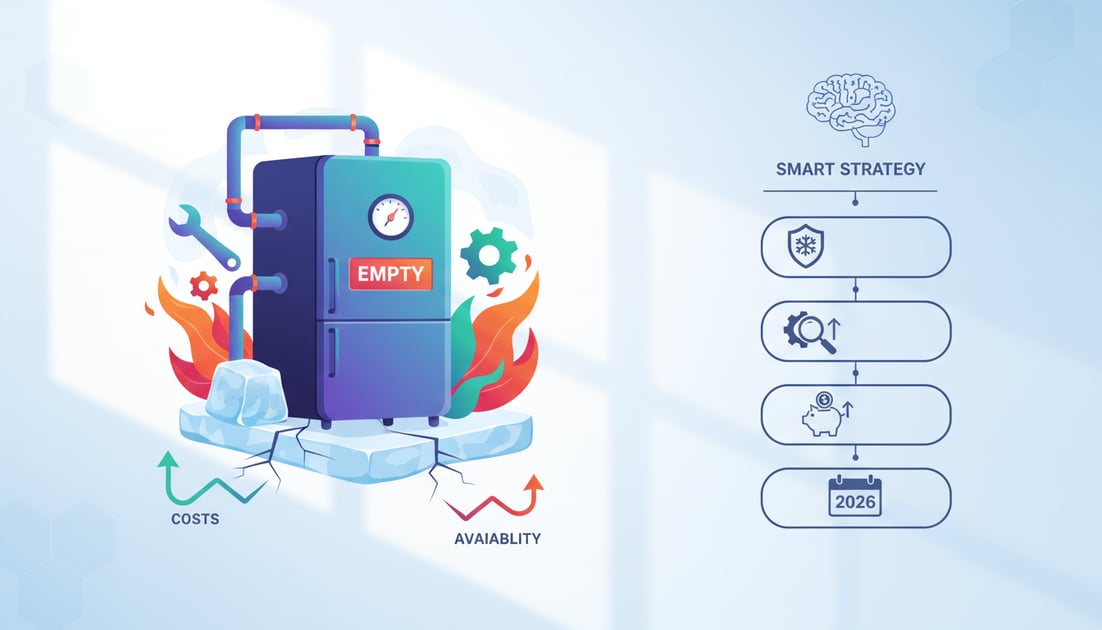
Reactive emergency responses cost significantly more than structured prevention strategies. Businesses implementing systematic preparedness plans reduce breakdown frequency by up to 40% whilst minimising disruption when failures inevitably occur.
Maintenance scheduling forms your foundational defence. Professional servicing every three months identifies deteriorating components before catastrophic failure – condenser coils accumulate debris reducing efficiency, door seals perish gradually, and refrigerant levels decline imperceptibly. Quarterly inspections by qualified technicians catch these issues early, preventing emergency callouts during peak trading. Schedule maintenance during quieter trading periods to avoid operational disruption.
Staff training protocols transform employees into early warning systems. Train teams to recognise abnormal sounds, temperature fluctuations, and frost accumulation patterns indicating developing problems. Ensure multiple staff members understand emergency procedures – who contacts repair services, how to document temperatures, and where backup equipment information resides. Food Standards Agency guidance emphasises staff competency in temperature monitoring as a legal compliance requirement, making training both operationally sensible and regulatory necessary.
Backup equipment planning prevents total operational shutdown. Identify local refrigeration hire companies before emergencies strike, establishing accounts and understanding availability. Maintain relationships with nearby businesses for reciprocal cold storage arrangements during crises. Document equipment specifications – dimensions, capacity requirements, electrical connections – enabling rapid temporary solution deployment without measurement delays during emergencies.
Emergency contact lists require accessibility and currency. Compile contact details for repair specialists, equipment hire companies, insurance providers, and local authority food safety officers. Review quarterly, updating personnel changes and contact numbers. Store digitally and physically – power failures may prevent electronic access when needed most.
Your Next Steps: Be Prepared Before the Next Breakdown
Refrigeration failures needn't devastate your business when you're properly prepared. This five-step framework – immediate assessment, temperature monitoring, professional contact, stock protection, and thorough documentation – transforms chaotic emergencies into managed incidents with minimal financial impact.
The distinction between businesses that recover quickly and those suffering prolonged disruption lies in preparation. Quarterly maintenance schedules identify deteriorating components before failure occurs, whilst staff training creates early warning capabilities that catch problems during reversible stages. Research indicates preventive strategies reduce unplanned downtime by up to 35%, delivering substantial operational savings.
Secure your emergency response capability now. Establish relationships with qualified repair specialists offering rapid deployment – average UK response times reach 1-2 hours for genuine emergencies. That Commercial Fridge Repair provides 24/7 emergency coverage alongside preventive maintenance programmes that protect your investment long-term.
Don't wait for the next breakdown to expose gaps in your preparedness.