
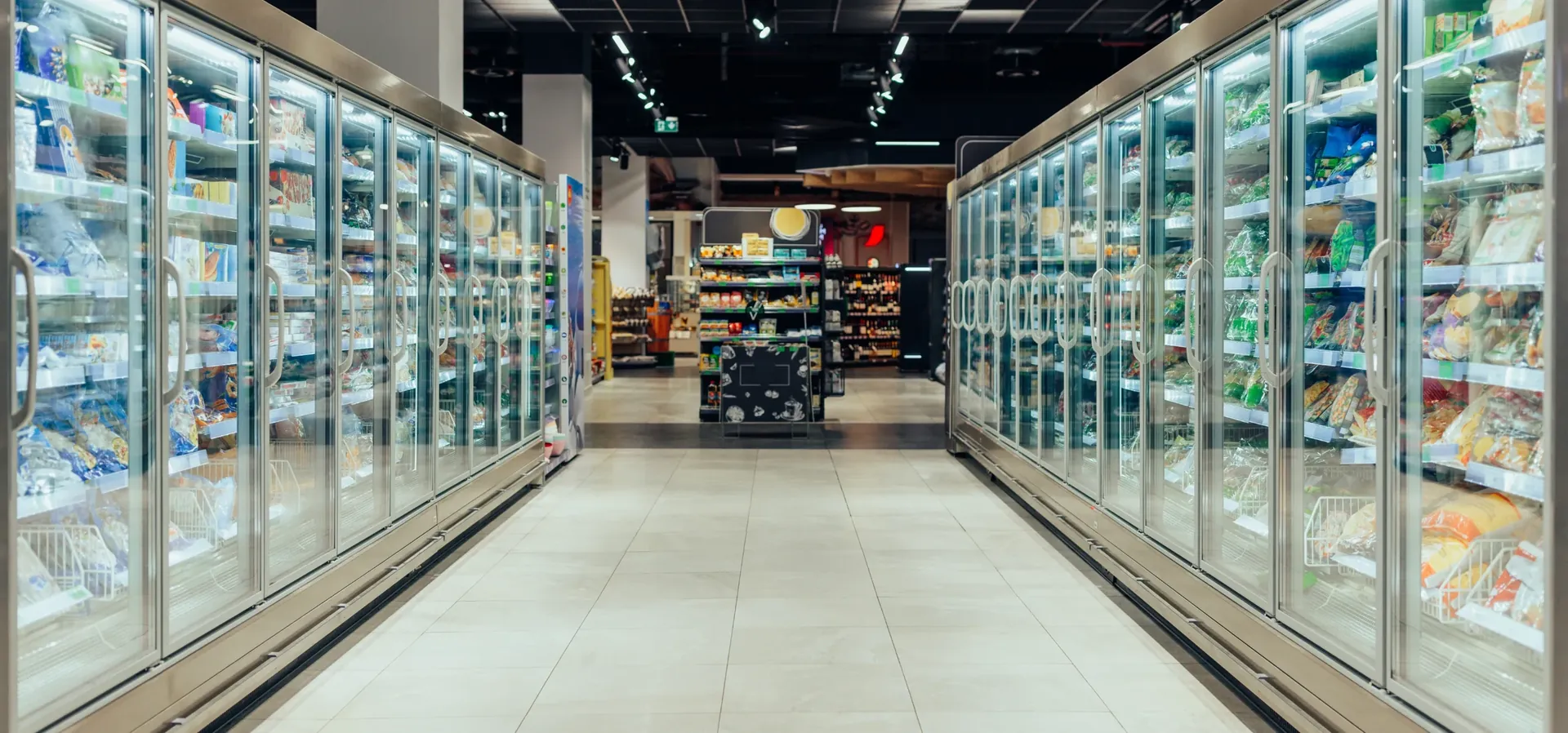
Commercial fridge repair across London and the South East
A fridge that stops cooling puts stock, service and your next EHO visit at risk. Our F-Gas certified engineers repair all major commercial brands, with 24/7 emergency call-outs when it cannot wait until morning.
- F-Gas certified, Refcom registered
- All major brands repaired
- 24/7 emergency call-outs
- Family-run since 2004
Certified, accredited and insured




Common commercial fridge faults, symptom by symptom
Most breakdowns show the same handful of symptoms. Knowing what each one usually means helps you decide what to do first, and it helps us send an engineer prepared for the right job.
Not cooling, or not cold enough
The most common call we get. The usual suspects are a condenser choked with dust and kitchen grease, a failed condenser or evaporator fan, a faulty thermostat or controller, or low refrigerant from a leak. A compressor on its way out can cause it too. Before you call, check the unit has power, the vents inside are not blocked by stock, and the condenser grille is not matted with fluff. Anything beyond that needs gauges and test equipment.
Ice building up on the evaporator plate
A thick coat of ice on the back plate or around the coil means the defrost cycle is not doing its job. That is usually a failed defrost heater, a defrost timer or sensor that has given up, or a door seal letting warm, moist air in around the clock. Do not chip the ice off: it is easy to puncture the coil and turn a small repair into a dead unit. Switch the unit off, let it defrost fully, and book an engineer.
Water leaking onto the floor
Water under or inside the cabinet is most often a blocked condensate drain, a cracked or displaced drain tray, or a door heater that has failed and let condensation build. Occasionally the unit is simply not level and the meltwater runs the wrong way. Leaks are worth sorting promptly, because standing water in a kitchen is a slip hazard and an EHO will notice it.
A noisy or short-cycling compressor
Clicking every few minutes points to a failing start relay or capacitor: the compressor tries to start, cannot, and cuts out on its overload. A steady rattle or knock can be worn mountings or bearings. A compressor that runs constantly and never rests is often fighting a dirty condenser, a refrigerant problem or a failed seal. Left alone, each of these ends the same way: a burnt-out compressor, which is the most expensive part in the cabinet.
Split or perished door seals
Gaskets harden and split with age and cleaning chemicals. The gaps let warm air in, so the compressor runs longer, ice forms where it should not, and the temperature creeps up. Seals are one of the cheapest repairs there is, and one of the best value: a new gasket often brings an apparently struggling fridge straight back to temperature.
Temperature alarm going off
The alarm is the controller telling you the cabinet has been above its set point for longer than the delay allows. Treat it as real until you have checked it: confirm with a separate probe thermometer rather than the unit's own display. If the probe agrees, move the stock and call us. If the probe says the cabinet is fine, the sensor or controller is lying to you and still needs looking at.
Tripping the electrics
A fridge that trips the breaker is telling you something is drawing too much current or leaking it to earth: a compressor struggling to start, a fan motor breaking down, a defrost heater with moisture in it, or damaged wiring. Resetting the breaker and hoping is how small electrical faults become burnt wiring. Leave it off and call.
What our engineers check on a visit
A proper diagnosis works through the system in order instead of swapping parts until something sticks. On a typical call-out the engineer will:
- Confirm cabinet and product temperatures, and the set point and differential on the controller
- Inspect and clean the condenser, and check both condenser and evaporator fans are running correctly
- Check the evaporator for ice patterns that point to defrost or refrigerant problems
- Take refrigerant pressures and look for oil traces and other signs of a leak
- Measure the compressor current draw against its rating plate
- Test the controller, sensors and probes against a calibrated thermometer
- Check door seals, hinges, closers and frame heaters
- Clear and test the condensate drain and tray
You get told what the fault is, what the repair involves and what it costs before parts are fitted. If the diagnosis points to a fault you can watch for yourself, our five-step breakdown action plan and the guide to walk-in cooler warning signs are worth a read. Some faults tempt people into a DIY fix, and our guide to why DIY commercial fridge repairs often cost more explains where the line sits.
Deciding between repair and replacement
Nobody wants to pay for a repair that only buys a few months. The honest way to look at it:
- Age and condition of the cabinet. A sound ten-year-old Williams or Foster with a failed fan is an easy yes for repair. A rusted, sagging cabinet with a dead compressor is not.
- Cost against a replacement. Once a repair approaches half the price of an equivalent new unit, replacement deserves serious thought. Fans, seals, sensors, controllers and relays sit well under that line; compressors and evaporator coils on old cabinets often sit near it.
- Running costs. New cabinets use noticeably less electricity than tired ones, so a replacement can partly pay for itself on a unit that runs all day, every day.
- How critical the unit is. A prep fridge you cannot trade without argues for whichever option gets you reliably cold soonest, even if that is a replacement rather than a wait for parts.
Our engineers will give you both figures where replacement is a sensible option, so the decision is yours with the numbers in front of you.
Food safety temperatures you need to hold
UK food safety law requires chilled food to be kept at 8°C or below, and the Food Standards Agency recommends running fridges at 5°C or below so you have a margin when doors are opened during service. Freezers should hold -18°C or colder. Vaccine fridges are tighter still: most vaccines must stay between 2°C and 8°C, which is why pharmacies and clinics call us the moment a medical fridge drifts.
Check temperatures with a probe, not just the cabinet display, and keep a written log. A temperature log plus the job sheets from your repairs is exactly the due-diligence evidence an environmental health officer asks to see.
What to do while you wait for the engineer
- Keep the doors shut. A closed, full cabinet holds its temperature far longer than an empty one that keeps getting opened.
- Move high-risk stock first: meat, fish, dairy, cooked food and vaccines go to a working unit before anything else.
- Record cabinet temperatures every hour. It protects you at an EHO visit and helps the engineer.
- Do not chip ice off the evaporator, bypass the controller or bridge the thermostat. Each one turns a repair into a bigger repair.
- If the unit is tripping the electrics, leave it off. Do not keep resetting the breaker.
Refrigerant, regassing and F-Gas
By law, only F-Gas certified engineers may work on refrigeration circuits, and every job involving refrigerant has to be recorded. A system that is low on gas has a leak somewhere, so regassing without leak testing is money down the drain and the gas straight back into the atmosphere. Our engineers pressure test, repair the leak where it is economic, then regas and complete the F-Gas records. Our fridge regassing guide explains when regassing is and is not the answer.
Areas we cover
Our engineers cover Greater London, Essex, Hertfordshire, Kent, Surrey and Berkshire. If you are close to the edge of those areas, call 020 3488 1889 and we will tell you straight away whether we can get to you.
We repair all the major commercial refrigeration brands
- Williams
- Foster
- Gram
- True
- Polar
- Precision
- Hoshizaki
- Scotsman
- Electrolux
- Adande
What Be Cool Group customers say
Commercial Fridge Repair is part of Be Cool Group. These are reviews from the group's customers.
Great Cold Room!
We had a small but difficult installation of a coldroom in our restaurant. Ali helped us minimise the downtime of our restaurant and installed a great coldroom for us!
Best Advice & Service!
I have known Ali from ‘Be Cool Refrigeration’ for the past year and he is a committed individual running a business that provides exceptional service. I had no hesitation to recommend one of my clients to him and not only did Ali deliver on a promise of great service but also recommended the right solution for the new showroom we had acquired for my client. This solution comprising of multiple units was not only effective given the size and format of the showroom it also has reduced the cost base and carbon footprint long term. Overall Be Cool Refrigeration has the right attitude and competence to be a trusted partner for whatever A/C, refrigeration, heating or similar systems you require. You are sure to be in the best hands with the best advice and service. I cannot recommend them highly enough.Read more
Knowledgeable! Professional!
Fridges, cold rooms, air-conditioning, ice machines, electric ovens, ice makers and MANY MORE…Be Cool have supplied and maintained our equipment since our restaurants, pubs and hotels opened (since 2010) and we have never look further…they have always responded to our calls and breakdowns. Knowledgeable! Professional!
Work to high quality
Be Cool have been working for us for over 5 years (since 2011), they install and maintain all the commercial refrigeration and air-conditioning equipment for our projects. Our trust has always grown in Be Cool and because of this we always follow their recommendations…. “They have simply never let us down attending emergencies immediately and undertaking the work to high quality”.Read more
The professionalism and quality of work was second to none!
We used BeCool Ltd. to install new air conditioning in one of our 800sqm London venues. Top class! This was a big project but took little over two weeks. From the initial consultation to the handover, nothing was too much. The professionalism and quality of work was second to none. Following that, we used them to upgrade the air conditioning in our second London venue. Could not fault Ali and his team and BeCool Ltd is now our go-to place for AC and refrigeration. Thanks!Read more
Huge thank you to Be Cool!
Huge thank you to Be Cool after picking up the phone on a Sunday and providing good fast advice which other companies had completely failed to do. Thank you.
Commercial fridge repair FAQs
Do you charge a call-out fee?
It depends on the unit, your location and the time of day. We explain how our charges work on the phone before anything is booked, so there are no surprises when the engineer arrives.
Can you come out of hours?
Yes. Emergency call-outs run 24 hours a day, 7 days a week, including weekends and bank holidays. Phone us and we will give you a realistic arrival window.
Do you repair my brand of fridge?
Almost certainly. Our engineers work on all major commercial refrigeration brands, including Williams, Foster, Gram, True, Polar, Precision, Hoshizaki, Scotsman, Electrolux and Adande.
How long does a commercial fridge repair take?
Many faults, such as fans, thermostats, controllers, door seals and blocked drains, are fixed on the first visit when the part is available. Sealed-system work and compressors can need parts ordered in, and the engineer will tell you honestly which situation you are in before any work starts.
Can you regas a commercial fridge?
Yes, but a fridge that is low on refrigerant has a leak, and topping it up without finding that leak wastes your money. Our F-Gas certified engineers pressure test, find and repair the leak where it is economic to do so, then regas and record the work. Our guide to fridge regassing explains the process.
Is it worth repairing an old commercial fridge?
Often, yes. Seals, fans, sensors and controllers are inexpensive repairs on a sound cabinet. If the compressor has failed on an old unit and the repair cost approaches half the price of an equivalent new one, we will say so and talk through the options rather than sell you a repair you will regret.
Book a commercial fridge repair
Tell us the fault and your postcode and we will give you a realistic arrival window and confirm the costs before anything is booked.