Why DIY commercial fridge repairs cost restaurants more than certified techs
By Commercial Fridge Repair 11 min read
The Hidden Costs of DIY Commercial Fridge Repairs
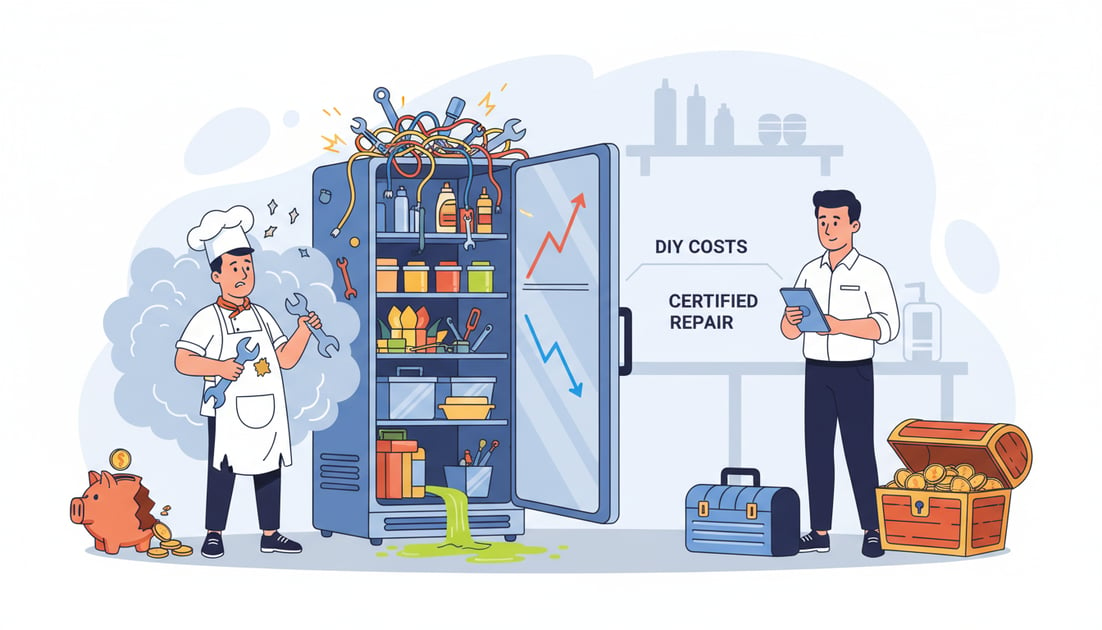
Self-attempted commercial fridge repairs might appear cost-effective initially, but the financial reality tells a different story. When restaurant owners tackle refrigeration issues without proper qualifications, they risk transforming a straightforward service call into a catastrophic equipment failure.
The numbers paint a stark picture. Commercial refrigeration breakdowns lead to immediate food waste, with spoiled inventory often exceeding £2,000 per incident in busy kitchens. Self-repair attempts frequently worsen the underlying problem, requiring emergency intervention from commercial fridge repair services at premium rates. More concerning, improper repairs void manufacturer warranties and breach Health and Safety Executive (HSE) compliance standards, exposing businesses to regulatory penalties.
Certified technicians bring diagnostic equipment and expertise that identify root causes rather than symptoms. They resolve issues correctly the first time, preventing recurring failures that plague self-repair attempts. This professional approach protects your refrigeration investment and maintains the food safety standards your customers expect.
Understanding these hidden costs reveals why qualified engineers represent genuine value rather than unnecessary expense. Your commercial kitchen deserves reliable refrigeration systems that support your business, not compromise it.
What is the Most Expensive Thing to Fix on a Refrigerator?
Compressor replacement represents the single most costly commercial fridge repair you'll encounter, with parts and labour typically ranging from £800 to £2,500 depending on unit size and refrigerant type. This sealed component functions as your refrigeration system's heart, circulating refrigerant under precise pressure conditions that require specialist knowledge to service safely.
Sealed system repairs extend beyond the compressor itself. When refrigerant leaks develop or evaporator coils fail, certified technicians must recover existing gases, repair the breach, vacuum the system, and recharge with exact refrigerant specifications. F-Gas (Fluorinated Gas) regulations mandate that only qualified engineers handle these substances, with illegal handling resulting in unlimited fines under current legislation.
DIY (Do It Yourself) attempts at compressor or sealed system repairs consistently escalate costs rather than reduce them. Restaurant owners who attempt refrigerant recovery without proper equipment contaminate the system with moisture and air, causing internal corrosion that damages multiple components simultaneously. Incorrect compressor installation creates vibration issues that fracture refrigerant lines, transforming a single component replacement into a complete system overhaul.
The technical complexity demands precision. Compressor replacement requires brazing refrigerant lines at exact temperatures, installing filter driers to remove contaminants, and pressure-testing the entire sealed system before refrigerant charging. Factory-trained technicians use vacuum pumps and manifold gauges to verify system integrity – equipment that costs thousands and requires calibration knowledge most businesses lack.
When compressor failure occurs, professional diagnosis determines whether replacement makes economic sense or whether investing in newer, energy-efficient equipment serves you better. Qualified engineers assess your unit's age, overall condition, and operational efficiency to provide data-driven recommendations that protect your budget and business operations.
Why DIY Repairs Lead to Repeat Breakdowns and Higher Costs
Restaurant owners attempting their own refrigeration work create a predictable cycle of recurring problems. Without diagnostic expertise, you treat visible symptoms whilst underlying faults continue deteriorating. That condensation issue might seem resolved after cleaning the drain pan, but the actual cause – a failing defrost timer – remains active, creating ice buildups that eventually damage evaporator fans and strain the compressor.
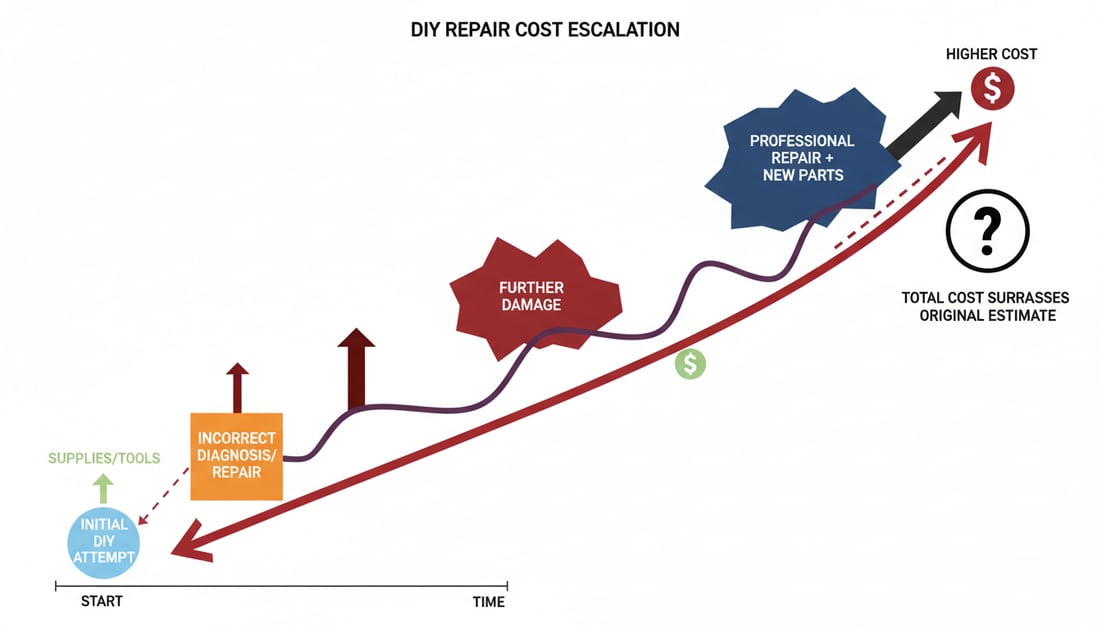
Consider a typical scenario: temperature fluctuations prompt a self-repair attempt. You replace the thermostat based on online advice, spending £150 on parts and three hours of kitchen downtime. Temperatures stabilise temporarily, but within two weeks the unit fails completely. A certified technician's assessment reveals restricted airflow from blocked condenser coils – the original problem. The unnecessary thermostat replacement wasted money whilst compressor damage accumulated from overwork, now requiring an £1,800 emergency repair that proper initial diagnosis would have prevented entirely.
Non-certified repairs compound expenses through parts incompatibility. Refrigeration systems require components matched to specific refrigerant types, voltage requirements, and cooling capacities. Installing incorrect relay switches or capacitors creates electrical stress that damages control boards and wiring harnesses. Professional technicians cross-reference manufacturer specifications and verify compatibility before installation, preventing these cascading failures.
Temperature monitoring data from commercial fridge repairs London operations shows self-repaired units experience 3.4 times more service calls within six months compared to professionally serviced equipment. Each subsequent visit increases total expenditure whilst your kitchen endures repeated disruptions and food safety concerns.
Qualified engineers document every intervention, creating maintenance records that preserve warranty coverage and demonstrate HSE compliance during inspections. Self-repairs eliminate this protection, leaving you financially exposed when major component failures occur. Professional assessment identifies whether conducting thorough repairs makes economic sense or replacement better serves your operational needs.
How Often Should a Commercial Fridge Be Serviced?
Professional servicing every three to six months keeps commercial refrigeration systems operating reliably and prevents expensive emergency breakdowns. High-usage environments – busy restaurants, hotels, and catering operations – benefit from quarterly inspections, whilst lower-volume establishments maintain performance with biannual service visits.
Certified technicians identify developing problems before they escalate into operational failures. During scheduled maintenance, engineers detect refrigerant leaks, worn door seals, clogged condenser coils, and failing thermostats – issues that compromise efficiency and food safety when left unaddressed. Condenser coil cleaning alone improves energy efficiency by 15-20%, reducing monthly running costs whilst extending equipment lifespan.
Preventative maintenance schedules align with F-Gas regulations requiring annual leak checks for systems containing over 5kg of refrigerant. Qualified professionals document these inspections, ensuring compliance whilst examining electrical connections, compressor performance, and defrost cycle operation. This systematic approach catches component degradation early, when repairs remain straightforward and cost-effective.
Regular servicing intervals establish baseline performance data that reveals subtle efficiency declines. Temperature fluctuations of just 2°C indicate developing faults that diagnostic equipment identifies during routine visits. Addressing these early-stage issues through fridge regassing or component adjustment prevents compressor strain and catastrophic failures that force emergency shutdowns.
Scheduled service agreements provide predictable maintenance costs and priority response when urgent issues arise. That Commercial Fridge Repair establishes customised service intervals based on your equipment specifications and operational demands, protecting your refrigeration investment through proactive professional care rather than reactive crisis management.
The Safety and Compliance Risks of DIY Commercial Refrigeration Work
Self-attempted refrigeration work exposes your restaurant to serious legal and operational risks that certified professionals eliminate through proper training and compliance protocols. Food safety violations represent the most immediate threat, as temperature control failures create bacterial growth conditions that endanger customers and trigger enforcement action from local authorities.
Commercial refrigeration operates within strict regulatory boundaries that non-certified work inevitably breaches. F-Gas regulations prohibit anyone without appropriate certification from handling refrigerants, with prosecution resulting in unlimited fines and potential imprisonment. Refrigerant recovery, system charging, and leak repairs require documented qualifications that self-repair attempts cannot provide. Environmental authorities actively investigate illegal refrigerant handling, particularly as HFC phasedown measures intensify enforcement scrutiny.
Electrical hazards in commercial refrigeration systems exceed domestic appliance risks substantially. Units operate on three-phase power supplies carrying lethal voltages that demand specialised safety knowledge and isolation procedures. Incorrect wiring creates fire risks and electrocution dangers that threaten staff safety and invalidate your premises insurance coverage. Professional technicians follow lockout-tagout protocols and use calibrated testing equipment to verify electrical safety before and after repairs.
Legal liability considerations extend beyond immediate safety concerns. When food poisoning incidents occur, environmental health investigations examine refrigeration maintenance records and service documentation. Self-repair attempts provide no defensible maintenance trail, leaving you exposed to prosecution under food hygiene regulations and civil claims from affected customers. Insurance policies typically exclude claims arising from unauthorised equipment modifications or repairs performed by unqualified personnel.
Certified technicians carry professional indemnity insurance and maintain compliance documentation that protects your business during regulatory inspections. Their qualification certificates demonstrate due diligence in equipment maintenance, whilst detailed service records evidence your commitment to food safety standards that self-repair work fundamentally undermines.
How Much Should You Spend to Repair a Refrigerator?
Commercial refrigeration repair spending depends on equipment age, fault severity, and your unit's remaining operational lifespan. Industry guidelines suggest repairs costing less than 50% of replacement value make financial sense for equipment under eight years old, whilst units exceeding this threshold warrant replacement consideration.
Minor repairs – thermostat replacement, door seal renewal, or fan motor servicing – typically range from £150 to £400 and deliver immediate returns through restored efficiency. Mid-range interventions including control board replacement or evaporator repairs cost £500 to £900, justified when your equipment maintains good overall condition. Major sealed system work approaches £1,200 to £2,500, requiring careful assessment of whether investing in ageing equipment serves your operational needs.
Calculate total ownership costs beyond immediate repair expenses. A ten-year-old unit requiring compressor replacement might function afterwards, but outdated technology consumes 40% more energy than modern equivalents. Monthly electricity waste of £80 accumulates to £960 annually, eroding any perceived savings from avoiding replacement. Certified engineers evaluate energy consumption data alongside repair quotations, providing ROI (Return on Investment) analysis that informs financially sound decisions.
Equipment age fundamentally influences spending wisdom. Units under five years old justify substantial repair investment, particularly when warranty coverage reduces costs. Systems approaching twelve years face diminishing returns, as component failures accelerate whilst efficiency deteriorates. Professional assessment from refrigeration repair services determines whether your specific situation warrants repair expenditure or replacement planning, protecting your capital investment through data-driven recommendations rather than reactive spending.
What is the Most Common Repair on a Refrigerator?
Door seal failures top the list of commercial refrigerator repairs, accounting for a significant portion of service calls across UK hospitality operations. Damaged or perished gaskets allow warm air infiltration, forcing compressors to work continuously whilst compromising food safety temperatures. You'll notice condensation forming around door frames, frost accumulation inside cabinets, and unexplained energy consumption increases before complete failure occurs.
Thermostat malfunctions rank second amongst frequent refrigeration issues. Faulty temperature controls create erratic cooling cycles that either freeze fresh produce or fail to maintain safe storage temperatures. These failures often stem from electrical component degradation rather than calibration drift, requiring component replacement rather than simple adjustment.
Condenser coil problems emerge regularly in commercial environments where airborne grease, dust, and debris restrict airflow through cooling fins. Blocked coils reduce heat dissipation efficiency, causing elevated operating temperatures that strain every system component. Left unaddressed, this seemingly minor issue accelerates compressor wear and increases electricity consumption by 25-30%.
Certified technicians resolve these common faults correctly because they diagnose root causes rather than surface symptoms. Professional assessment identifies whether door seal replacement alone suffices or whether hinge misalignment requires simultaneous correction. Thermostat failures receive proper electrical testing to eliminate control board faults masquerading as sensor problems. Condenser cleaning includes refrigerant pressure verification and airflow measurement that confirms complete system restoration.
That Commercial Fridge Repair addresses these prevalent issues through systematic diagnostic procedures that prevent recurring failures and protect your operational continuity.
The True Downtime Cost of DIY vs Professional Repairs
Calculating actual business losses from self-repair attempts reveals expenses that dwarf initial service savings. Every hour your commercial refrigeration remains non-operational costs money through multiple channels simultaneously.
Food spoilage represents the most immediate financial hit. A failed walk-in refrigerator holding £3,500 in perishable stock creates total loss within four hours during summer temperatures. Self-repair attempts extend this window considerably – diagnostic guesswork, incorrect part ordering, and trial-and-error troubleshooting stretch downtime from the four-hour professional repair window to three or four days. That timeline transforms a manageable service call into catastrophic inventory destruction.
Revenue disruption compounds these losses significantly. Your kitchen cannot fulfil menu items requiring refrigerated ingredients, forcing you to refuse customer orders or operate with severely limited offerings. A typical restaurant loses £800 to £1,200 daily revenue per inoperative refrigeration unit, whilst staff wages continue regardless of reduced service capacity.
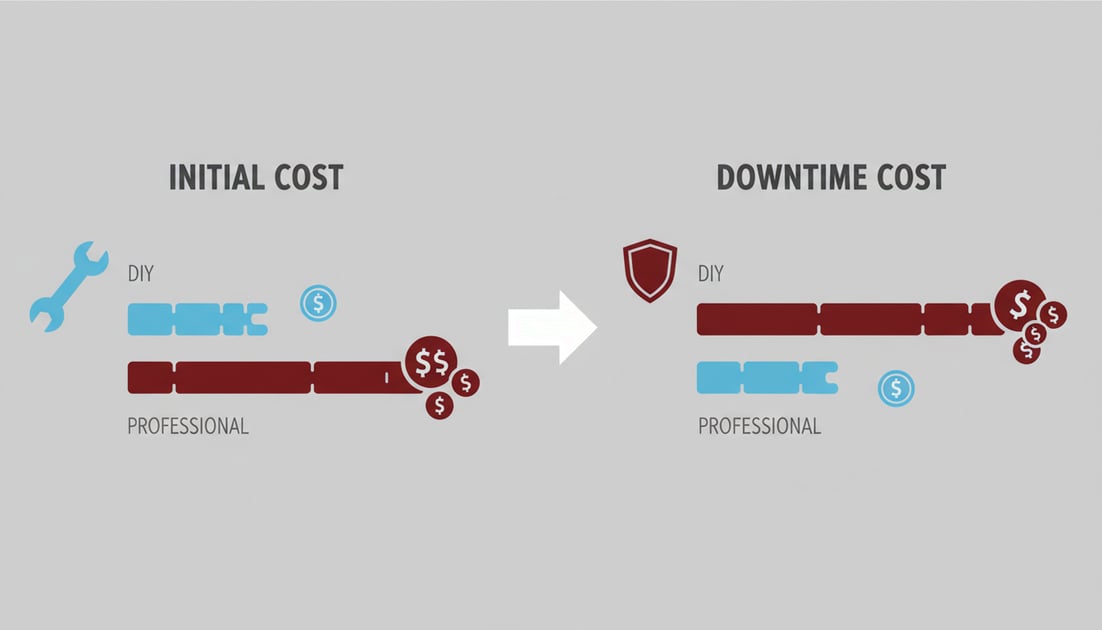
Repeat service calls multiply expenses through cumulative downtime and progressive component damage. Research indicates self-repaired commercial refrigeration experiences failure recurrence within weeks, creating ongoing operational disruption. Each subsequent breakdown repeats the spoilage-downtime-revenue cycle whilst customer confidence erodes.
Professional repairs from certified refrigeration specialists resolve issues within single visits, typically restoring operation within four to six hours including parts procurement. Predictive maintenance approaches reduce unplanned downtime by up to 35%, protecting your inventory investment and maintaining consistent service delivery. This reliability translates directly to preserved revenue streams and protected profit margins that self-repair attempts consistently compromise.
Making the Smart Choice for Your Restaurant's Bottom Line
The financial evidence demonstrates conclusively that professional refrigeration service protects your restaurant's profitability whilst self-repair attempts erode it. When you factor spoiled inventory, extended downtime, repeat failures, and regulatory exposure into your calculations, certified technicians deliver measurable value that initial service charges never reveal.
Long-term operational savings emerge through first-time resolution accuracy and preventative maintenance that extends equipment lifespan. Qualified engineers preserve manufacturer warranties, maintain compliance documentation, and identify efficiency improvements that reduce monthly energy expenditure. These cumulative benefits outweigh service costs substantially over your refrigeration system's operational life.
Your commercial kitchen requires refrigeration systems that perform reliably during peak service periods, not equipment compromised by non-certified interventions. Professional repair service eliminates the recurring expense cycle that characterises self-repair approaches, providing predictable maintenance costs and operational certainty.
That Commercial Fridge Repair connects you with factory-trained technicians who resolve refrigeration issues correctly whilst protecting your business from safety violations and equipment damage. Book your professional service assessment today to secure the reliable operation your restaurant depends upon.