Walk-in cooler repair response times: What to expect in 2026
By Commercial Fridge Repair 13 min read
Why Response Times Matter More Than Ever in 2026
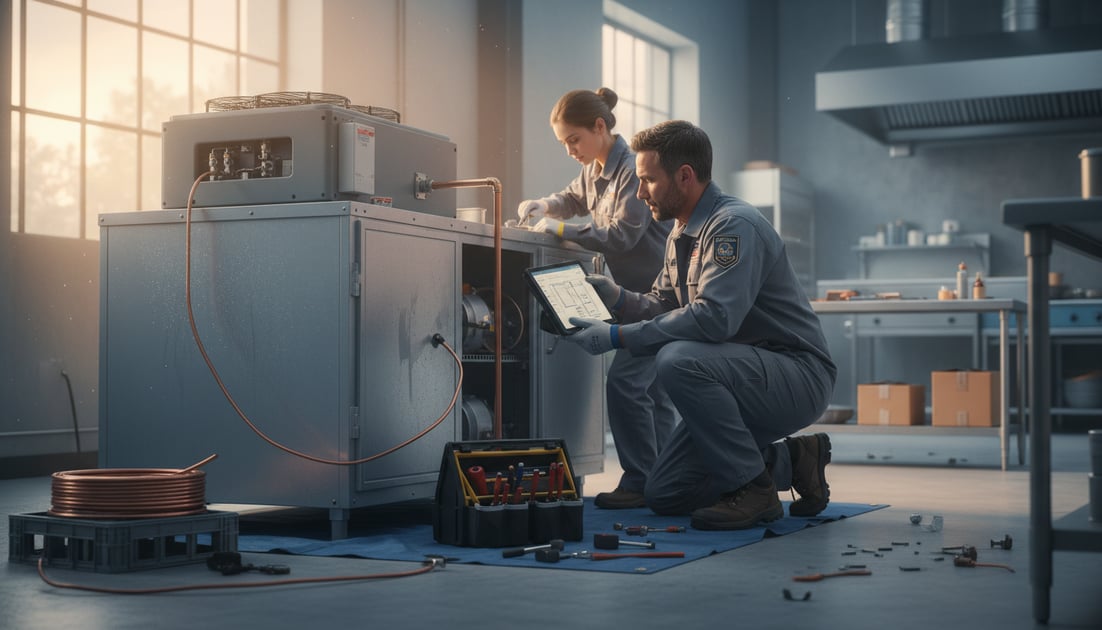
When your walk-in cooler malfunctions at 3am on a Saturday, every minute counts. Equipment downtime in commercial refrigeration doesn't just mean lost convenience – it translates directly to spoiled stock, violated food safety protocols, and revenue bleeding from your business. The stakes have never been higher.
Industry data shows that predictive maintenance can reduce unplanned downtime by more than 40%, but when emergency repairs become unavoidable, response windows determine whether you lose hundreds or thousands of pounds in perishable inventory. A walk-in cooler repair that arrives within two hours might save your weekend stock. One that takes eight hours guarantees you're binning everything inside.
That Commercial Fridge Repair operates on the principle that emergency response isn't negotiable in 2026. Temperature monitoring systems now alert you the moment conditions drift outside safe zones, but those alerts only matter if qualified technicians can reach your site before spoilage begins. The gap between detection and repair has narrowed dramatically, and service providers who can't meet tighter response expectations simply don't cut it anymore.
Geographic factors still affect availability. Urban locations typically see faster response times than rural sites, but a proper maintenance contract should specify guaranteed windows regardless of your postcode.
2026 Industry Response Time Benchmarks You Should Expect
The commercial refrigeration sector has established clear response time standards for 2026. Emergency repair calls should receive acknowledgement within 15 minutes and on-site attendance within 2-4 hours for urban locations. Scheduled maintenance typically operates on 24-48 hour windows, whilst non-urgent repairs fall into 3-5 business day timeframes.
These benchmarks aren't arbitrary. Industry data from UK retail facilities shows that 4-hour response windows have become the standard expectation for emergency callouts across commercial refrigeration services. That Commercial Fridge Repair maintains 24/7 availability with guaranteed response windows that align with these industry standards, recognising that temperature-critical failures demand immediate action.
Response Time Standards by Service Type
| Service Category | Urban Response Window | Rural Response Window | Temperature Risk Level |
|---|---|---|---|
| Emergency Repair | 2-4 hours | 4-8 hours | Critical (0-4°C breach) |
| Urgent Repair | 12-24 hours | 24-48 hours | Moderate (efficiency loss) |
| Scheduled Maintenance | 24-48 hours | 48-72 hours | Preventative |
| Non-Urgent Repair | 3-5 business days | 5-7 business days | Low (cosmetic/minor) |
Geographic factors create unavoidable variations. Rural locations face extended response windows due to technician travel distances, but a proper maintenance contract should specify maximum response times regardless of your postcode. Energy efficiency monitoring systems now detect performance degradation before complete failure, giving you leverage to schedule repairs within less urgent timeframes.
When evaluating service contracts, demand specific response time guarantees in writing. Vague promises of "rapid response" or "priority service" mean nothing without contractual hours attached. The difference between a 2-hour and 8-hour emergency response can determine whether you salvage your stock or face complete loss. System lifespan extends significantly when providers meet consistent response benchmarks, reducing the frequency of catastrophic failures that demand emergency intervention.
Factors That Impact Your Actual Wait Time
Response time guarantees look clean on paper, but real-world variables determine whether a technician arrives in two hours or eight. Understanding these factors lets you evaluate service contracts more critically and set realistic expectations when you need emergency repair.
Geographic Location and Service Coverage – Your postcode directly affects response windows. Urban centres with concentrated commercial refrigeration infrastructure typically see technicians arrive within 2-4 hours for emergency callouts. Rural locations face 4-8 hour windows due to travel distances and lower technician density. Some postcodes fall outside primary service zones entirely, adding hours to any response. When searching for walk in cooler repair near me, verify the provider maintains engineers within your region rather than dispatching from distant hubs.
Seasonal Demand Patterns – Summer months create peak demand for commercial walk in cooler repair near me as ambient temperatures stress refrigeration systems. Cooling degree days in Europe have increased by 15% over the past decade, directly correlating with equipment failures during heat waves. You'll face longer wait times in June through August when every restaurant and supermarket battles temperature control issues simultaneously. Winter brings different pressure – November electricity demand in the UK rose 6% month-on-month recently, indicating seasonal strain on commercial equipment.
Time of Day and Day of Week – Emergency repair requests surge during business hours and weekends when commercial kitchens operate at full capacity. A walk-in cooler breakdown at 3pm Friday competes with dozens of other urgent calls. Overnight failures between midnight and 6am often receive faster response because fewer simultaneous emergencies occur, despite premium callout fees.
Existing Maintenance Contract Terms – Contracts with guaranteed response windows and dedicated account technicians eliminate queue uncertainty. Businesses without service agreements join general emergency queues where response times fluctuate based on technician availability and competing priorities. Food safety compliance and stock loss risks don't pause while you wait.
The True Cost of Delayed Repairs: Stock Loss and Revenue Impact
A supermarket in Manchester lost £12,000 worth of chilled stock when their walk-in cooler failed on a Friday evening and the repair technician didn't arrive until Monday morning. The temperature breach lasted 62 hours. Every dairy product, fresh meat cut, and prepared meal went straight into the bin.
Stock loss from equipment downtime represents the most immediate and quantifiable cost of delayed walk-in cooler repair. A typical restaurant walk-in cooler holds between £3,000 and £8,000 in perishable inventory at any given time. When internal temperatures rise above 5°C for more than four hours, food safety regulations require you to discard affected stock regardless of visual condition. The Food Standards Agency UK enforces strict cold storage compliance standards that leave no room for judgment calls about salvageable products.
Revenue impact extends beyond immediate stock loss. A malfunctioning cooler forces menu restrictions that turn away customers and damage reputation. Weekend failures hit hardest – restaurants operating at peak capacity lose both the spoiled inventory and the sales those ingredients would have generated. Recent industry data shows the UK foodservice market reached £104.81 billion in 2025, with independent outlets holding 56.72% market share. These businesses operate on thin margins where a single equipment failure can wipe out weeks of profit.
Temperature monitoring systems detect problems within minutes, but detection means nothing without rapid response. An 8-hour wait versus a 2-hour emergency repair window determines whether you lose everything or salvage most of your stock. That's the difference between a £500 inconvenience and a £12,000 disaster.
How Long Do Walk-In Coolers Last?
A properly maintained walk-in cooler typically delivers 15 to 20 years of reliable service, though system lifespan depends heavily on usage patterns, maintenance quality, and environmental conditions. Commercial freezer units operating at lower temperatures generally experience shorter lifespans of 10 to 15 years due to increased compressor stress and more demanding operational cycles.
The difference between a cooler that fails at year 12 and one that reaches year 20 comes down to preventative maintenance. Regular diagnostic inspections catch refrigerant leaks, worn door seals, and compressor inefficiencies before they cascade into catastrophic failures. Temperature monitoring systems now provide early warning signs of performance degradation – a cooler struggling to maintain 3°C when set to 2°C signals impending component failure long before complete breakdown occurs.
Energy efficiency deteriorates as equipment ages. A 15-year-old walk-in cooler consumes 20-30% more electricity than it did when new, even without obvious malfunctions. That's why businesses often replace units before complete failure – the cost savings from modern energy-efficient models justify early retirement. A maintenance contract with scheduled inspections extends operational life by addressing minor issues before they compound, but no amount of servicing makes a 25-year-old cooler economically viable compared to current technology.
Equipment downtime from emergency repair becomes more frequent after year 12. You'll face a choice: invest in major component replacements or budget for a new installation.
How Often Is the Customer Required to Perform a Leak Inspection?
UK F-Gas regulations mandate refrigerant leak inspections based on your system's charge quantity. Commercial refrigeration systems containing between 3kg and 29kg of refrigerant require annual leak inspection – that's every 12 months without exception. Systems with larger charges face more frequent inspection schedules, whilst those under 3kg fall outside mandatory requirements.
The inspection frequency changes if you install a certified leak detection system. With automatic monitoring equipment in place, you can extend inspection intervals to every 24 months for systems rated between 5 and 50 tonnes CO2 equivalent. That's a significant compliance advantage for businesses managing multiple walk-in cooler units across sites.
A refrigerant leak doesn't just trigger emergency repair costs and equipment downtime. It creates legal liability under environmental regulations. Food safety depends on maintaining proper refrigeration temperatures, and a slow leak degrades system performance long before complete failure occurs. Regular inspections catch these issues during preventative maintenance windows rather than forcing you into costly emergency callouts at 3am.
Temperature monitoring systems detect performance degradation that often signals refrigerant loss, but they don't satisfy legal inspection requirements. You need certified technicians conducting physical leak checks at mandated intervals regardless of how sophisticated your monitoring equipment might be.
Evaluating Service Contracts: What Response Time Guarantees Actually Mean
Response time guarantees in a maintenance contract represent the maximum hours between your emergency call and when a technician arrives on-site. Not when they acknowledge your call. Not when they schedule you. When they physically arrive at your facility ready to diagnose and repair your malfunctioning walk-in cooler.
Step 1: Demand Written Response Windows, Not Vague Promises
Your service contract should specify exact hours for each service category. "Priority response" means nothing without numbers attached. Look for contracts that state "2-hour emergency response for equipment downtime affecting food safety" or "24-hour window for scheduled preventative maintenance". Anything less specific gives the provider unlimited wiggle room when you're watching stock spoil.
Step 2: Verify Geographic Coverage Matches Your Location
A 2-hour guarantee only works if technicians operate within your region. Ask providers where their nearest engineers are based relative to your postcode. Urban sites should expect 2-4 hour emergency windows. Rural locations realistically need 4-8 hours. Contracts that promise identical response times regardless of location either maintain excessive technician networks or routinely miss their commitments.
Step 3: Check Penalty Clauses for Missed Response Times
The best maintenance contracts include financial penalties when providers miss guaranteed windows. Look for clauses offering service credits, discounted callout fees, or partial refunds when response times exceed contractual limits. Providers confident in their capabilities build these protections into agreements. Those who don't typically miss deadlines without consequence.
Step 4: Distinguish Between Acknowledgement and Arrival
Some contracts guarantee 15-minute acknowledgement but bury actual arrival times in fine print. You need both. Acknowledgement confirms your call registered. Arrival determines whether you save your stock. That Commercial Fridge Repair structures response guarantees around on-site arrival times because acknowledgement doesn't prevent spoilage or reduce equipment downtime.
Step 5: Evaluate After-Hours and Weekend Coverage
Walk-in cooler repair emergencies don't respect business hours. Your contract should specify identical response windows for overnight and weekend callouts without premium delays. A provider offering 2-hour weekday response but 8-hour weekend response leaves you vulnerable when failures occur during peak service periods.
Technology Improving Response Times in 2026
Emerging technologies are fundamentally reshaping how responsive commercial refrigeration services operate. AI-powered platforms and remote temperature monitoring now detect failures before they escalate, whilst intelligent dispatch systems route technicians more efficiently than traditional call centre operations ever could. These advances translate directly into shorter wait times when your walk-in cooler malfunctions.
- AI-Powered Dispatch Systems – Artificial intelligence platforms now optimise technician routing in real-time based on location, skillset, parts inventory, and current workload. Traditional dispatch relied on manual assignment – a coordinator checking spreadsheets and making phone calls whilst your stock warmed. Modern AI dispatch systems calculate optimal assignments within seconds, considering traffic patterns, technician proximity, and equipment specialisation simultaneously. The Building Management System market is projected to reach $51.25 billion in 2026, driven largely by AI-based maintenance capabilities that reduce emergency response windows.
Remote Temperature Monitoring and Predictive Alerts – Connected sensors continuously track your cooler's performance and alert service providers before complete failure occurs. Hussmann and Phoenix Energy Technologies introduced Refrigeration IQ in March 2025, cutting supermarket leak rates by 30% in the first year through predictive monitoring. You receive alerts when temperatures drift outside safe zones or compressor efficiency drops below baseline performance. That advance warning lets you schedule repairs during off-peak hours rather than facing emergency callouts at premium rates.
Mobile Diagnostic Platforms for Technicians – Field engineers now carry diagnostic tablets that access equipment histories, manufacturer specifications, and troubleshooting protocols instantly. This eliminates the delays that occurred when technicians needed to return to workshops for technical manuals or call manufacturer support lines. Energy efficiency data streams directly to mobile platforms, letting technicians identify performance degradation patterns on-site and complete repairs in a single visit rather than multiple diagnostic trips.
Preventative Measures That Reduce Emergency Repair Frequency
Emergency repair calls drop dramatically when you implement structured preventative maintenance. Industry data consistently shows that businesses with regular service schedules experience 40% fewer unplanned equipment failures than those operating on a reactive repair-only model. The difference between extending system lifespan to 20 years versus watching it fail at 12 comes down to these specific measures.
Scheduled Quarterly Maintenance Inspections – Professional diagnostic inspections every three months catch refrigerant leaks, worn door seals, and compressor inefficiencies before they escalate into emergency failures. A qualified technician checks temperature consistency, inspects electrical connections, tests safety controls, and verifies refrigerant charge levels. These sessions typically take 90 minutes and cost a fraction of what you'll pay for emergency repair at 3am on a Saturday. That Commercial Fridge Repair structures maintenance contracts around quarterly visits because this interval balances thoroughness with cost-effectiveness whilst significantly reducing equipment downtime.
Real-Time Temperature Monitoring Systems – Connected sensors detect performance degradation days or weeks before complete failure occurs. When your cooler struggles to maintain 3°C despite being set to 2°C, that's an early warning sign that preventative action can address during normal business hours. Temperature monitoring reduces emergency callouts by shifting repairs into scheduled windows where response times and costs remain predictable. Food safety compliance depends on catching these drift patterns before stock loss occurs.
Staff Training on Daily Equipment Checks – Your team should verify door seals close properly, check for frost buildup, listen for unusual compressor sounds, and confirm temperature displays match actual conditions. Simple daily observations catch 30% of potential failures before they require professional intervention. Train staff to recognise warning signs and report them immediately rather than assuming minor issues will resolve themselves. A walk-in cooler repair that could have been scheduled becomes an emergency when ignored for weeks.
Proactive Component Replacement Based on Age – Compressors, evaporator fans, and door gaskets have predictable lifespans. Replace them at manufacturer-recommended intervals rather than waiting for failure. A maintenance contract with component tracking ensures you replace parts during scheduled service windows, not during peak business hours when failure forces emergency response. Energy efficiency improves with fresh components, often offsetting replacement costs through reduced electricity consumption.
Securing Fast, Reliable Walk-In Cooler Repairs
Understanding response time benchmarks and service contract guarantees puts you in control when equipment failures threaten your stock. Emergency repairs should arrive within 2-4 hours in urban locations, whilst scheduled maintenance operates on 24-48 hour windows. Those aren't aspirational targets – they're industry standards that separate providers who protect your investment from those who leave you watching inventory spoil.
Geographic location, seasonal demand, and contract terms determine your actual wait time when a walk-in cooler malfunctions. Businesses with maintenance contracts featuring guaranteed response windows eliminate the uncertainty that turns minor issues into catastrophic stock loss. Temperature monitoring systems detect problems early, but detection only matters if qualified technicians reach your site before food safety compliance fails and revenue bleeds from spoiled inventory.
That Commercial Fridge Repair operates 24/7 with guaranteed response windows that align with 2026 industry benchmarks, recognising that emergency response determines whether you lose hundreds or thousands of pounds in perishable stock. Their factory-trained technicians deliver on-site arrival within contractual timeframes, backed by transparent pricing and a 12-month parts warranty that extends system lifespan whilst reducing equipment downtime.
Don't wait until 3am on a Saturday to discover your service provider can't meet emergency response expectations. Evaluate contracts now based on written guarantees, geographic coverage, and penalty clauses for missed windows. Contact That Commercial Fridge Repair to discuss response time commitments that protect your business when cooling failures occur.
Frequently Asked Questions
How long do walk-in coolers last?
Lifespan. Most manufacturers list an expected lifespan of a commercial walk-in cooler or freezer to be about 15 years. However, with proper maintenance, regular cleaning, and quality repair work, they can last much longer.
How often is the customer required to perform a leak inspection?
For Comfort Cooling Systems having more than 50 pounds of refrigerant, Leak inspections should be done once per calendar year (Jan - Dec). For Commercial refrigeration and IPR (Industrial Process Refrigeration) systems having 50 to 500 pounds of refrigerant, Leak inspections should be done once per calendar year.